
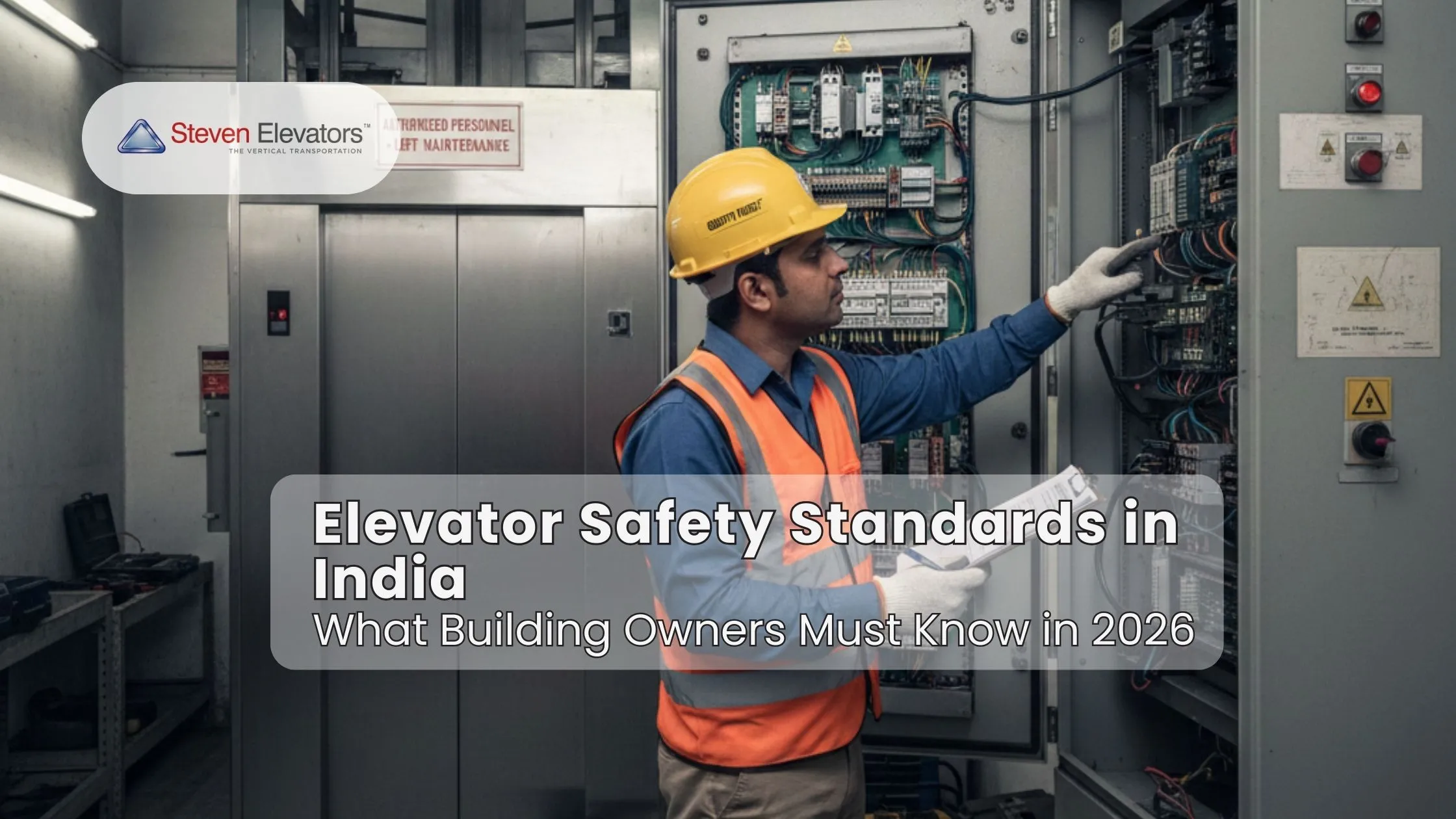
India’s skylines are rising faster than ever. With rapid urbanization, smart cities, and high rise residential and commercial developments, elevators have become a critical part of daily life. As the number of lifts in operation grows, so does the responsibility to ensure their safety, reliability, and regulatory compliance.
In 2026, elevator safety in India is entering a more structured and technology driven phase. Updated Bureau of Indian Standards, stricter inspection protocols, and higher expectations from occupants and insurers make safety compliance a top priority for building owners, facility managers, and developers.
This guide explains the latest elevator safety standards in India, key legal requirements, and how building owners can stay compliant while ensuring smooth and secure vertical transportation.
Why Elevator Safety Is More Critical Than Ever
According to industry estimates, India installs over 80,000 new elevators every year, making it one of the fastest growing elevator markets in the world. With a compound annual growth rate of around 10 to 12 percent, the total number of operational lifts in residential towers, IT parks, hospitals, malls, and metro stations is increasing rapidly.
More elevators mean:
- Higher passenger volume every day
- Greater wear and tear on mechanical and electrical systems
- Increased risk of breakdowns if maintenance is neglected
- Greater legal and safety responsibility for building owners
Even a minor fault in door sensors, braking systems, or control panels can lead to passenger entrapment, injuries, or operational shutdowns. This is why regulatory authorities and standards bodies are tightening safety norms for 2026 and beyond.
Latest Elevator Safety Standards in India for 2026
BIS IS 17900 Series – The New Safety Benchmark
The Bureau of Indian Standards has introduced the IS 17900 series, which is gradually replacing older lift safety codes such as IS 14665. This new standard aligns Indian elevator safety with international norms and focuses on advanced risk prevention.
Key safety enhancements under IS 17900 include:
- Protection against unintended car movement
- Improved overspeed governors and braking systems
- Stronger door locking and obstruction detection mechanisms
- Enhanced fire resistance of lift components
- Mandatory emergency lighting and alarm systems
- Two way communication for trapped passengers
For building owners, this means that new installations and modernized lifts must comply with IS 17900, and existing systems should be upgraded wherever possible to meet these safety benchmarks.
Mandatory Inspection and Maintenance Requirements
1. Periodic Safety Inspections
In 2026, compliance is not just about installation but also about continuous monitoring. Most state lift acts and municipal regulations mandate:
- Monthly routine checks for operational performance
- Quarterly technical inspections of mechanical and electrical systems
- Annual third party safety audits and certification
Inspection records must be documented and made available during audits, insurance renewals, or in case of incidents.
2. Preventive Maintenance by Authorized Experts
Only licensed and trained elevator service providers should carry out maintenance. Preventive maintenance typically covers:
- Brake and safety gear testing
- Wire rope and pulley inspection
- Door sensor calibration
- Control panel and drive system diagnostics
- Emergency alarm and intercom testing
Regular preventive maintenance not only improves safety but also extends equipment life and reduces unexpected downtime.
Fire Safety and Emergency Preparedness
Modern safety standards require elevators to be integrated with the building’s fire detection and alarm systems. In the event of a fire:
- Elevators should automatically return to a designated safe floor
- Normal passenger operation must be disabled
- Firefighter control mode should be activated for rescue operations
Emergency power backup is also essential to ensure that lifts can safely reach the nearest floor during power failures, preventing passenger entrapment.
Accessibility and User Safety Features
Safety is not only about mechanical reliability. It also includes user friendly and inclusive design. Current standards emphasize:
- Braille and tactile buttons for visually challenged users
- Audible floor announcements
- Proper cabin lighting and ventilation
- Non slip flooring and handrails
- Clearly visible emergency instructions
These features improve both safety and usability, especially in hospitals, public buildings, and senior living communities.
Practical Elevator Safety Checklist for Building Owners
To stay compliant in 2026, building owners should ensure:
- Elevators conform to BIS IS 17900 safety standards
- Installation is done by certified lift manufacturers
- Preventive maintenance contracts are active
- Monthly, quarterly, and annual inspections are documented
- Emergency communication systems are functional
- Power backup and fire integration systems are tested regularly
- Safety signage and operating instructions are displayed
- Old elevators are modernized to meet current safety norms
Role of Steven Elevators in Ensuring Compliance and Safety
For building owners in Chennai and across Tamil Nadu, partnering with an experienced and safety focused lift manufacturer is crucial.
Steven Elevators is one of the leading lift manufacturers in Chennai, known for delivering high quality passenger lifts, goods lifts, hospital elevators, and machine room less elevator solutions. With a strong focus on engineering excellence and safety compliance, Steven Elevators designs and installs elevators that align with the latest BIS standards and regulatory requirements.
Key strengths that support building owners in 2026 include:
- Elevators designed with advanced safety systems and reliable components
- Professional installation by trained and certified engineers
- Preventive maintenance and AMC services for long term operational safety
- Modernization solutions to upgrade older lifts to current safety codes
- Dedicated service support for residential, commercial, and industrial projects
By choosing a trusted partner like Steven Elevators, building owners can ensure that their vertical transportation systems are not only compliant but also future ready.
How Safety Compliance Impacts Property Value and Liability
From an asset management perspective, safe and well maintained elevators:
- Enhance tenant satisfaction and retention
- Reduce insurance risk and premiums
- Minimize legal exposure in case of accidents
- Improve overall building reputation and market value
In contrast, non compliance can lead to penalties, operational shutdowns, and serious legal consequences. Investing in safety is therefore both a regulatory necessity and a smart business decision.
Conclusion
Elevator safety standards in India are evolving rapidly, and 2026 marks a significant shift towards stricter compliance, smarter monitoring, and higher accountability for building owners. With the adoption of BIS IS 17900, enhanced inspection regimes, and advanced safety technologies, elevators are expected to meet global benchmarks for reliability and passenger protection.
For building owners, the path forward is clear. Follow updated safety regulations, implement preventive maintenance, conduct regular inspections, and work with experienced lift manufacturers and service providers.
Steven Elevators, as a trusted name among lift manufacturers in Chennai, continues to support residential and commercial projects with safe, compliant, and high performance elevator solutions that meet today’s standards and tomorrow’s expectations.